A youth support group on how to resolve conflicts in relationships took place during the blackout
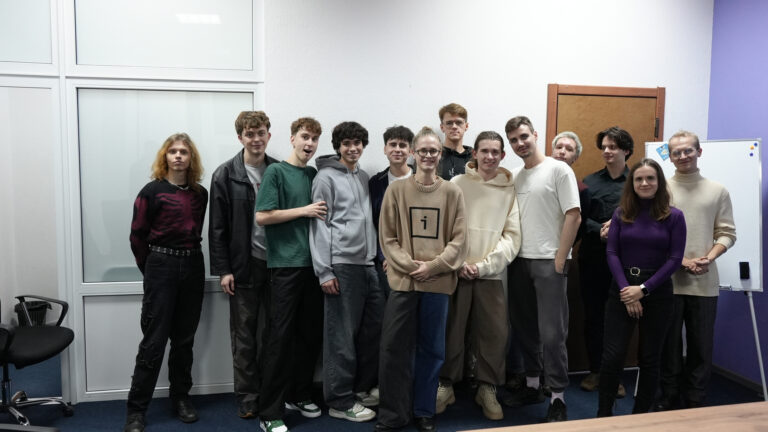
On 9 November, the Mentally.one team held another meeting of the youth support group in Kyiv. This time, the session took place in a format that proved that even a full blackout cannot stop safe spaces where young people can learn, interact, and receive psychological support.
Despite the power outage, we connected the projector to an EcoFlow battery, set up additional lighting sources, and started the group on time. For participants from the LGBTQI+ community, this became a symbol of reliability, care, and community resilience even under the most challenging circumstances. During the second half of the meeting, electricity returned to Kyiv, and the group continued with full lighting.
The focus of the session was one of the most relevant topics for young people today — constructive conflict resolution in relationships. After all, conflict is not the end but a moment of truth when real boundaries, needs, and closeness become visible.
Participants explored:
- how each of us reacts to disagreements;
- what triggers “emotional explosions”;
- how to talk about difficult things without destroying the relationship;
- how to see the partner’s underlying need rather than a threat.
The aim of the session was to help young people recognise their triggers, build empathetic communication without aggression or fear, and learn to seek solutions instead of attack or withdrawal.
How the session unfolded
The meeting lasted for two hours and combined both theoretical and practical components.
1. Welcome & group rules
Participants introduced themselves and discussed the principles of confidentiality, mutual respect, and the “stop rule.”
2. Exercise: “Conflict Triggers”
Each person named a situation that acted as their personal trigger. This created an emotionally safe space for open discussion.
3. Demonstration: “Mentos and Cola”
Through a simple yet powerful experiment, participants observed a model of conflict reactivity — how strong emotions can “explode” if they are not recognised and regulated.
4. Theoretical modules
- what conflict is and how it functions;
- the model of constructive communication;
- how to distinguish conflict from abuse or bullying;
- steps for emotionally safe conflict resolution.
5. Exercise: “Debates” (German model)
Participants practised expressing firm arguments without aggression — with respect for another point of view.
6. Exercise: “Stone and Water” / “My Beliefs in Relationships”
This part helped participants explore their personal patterns, boundaries, needs, and beliefs in relationships.
7. Reflection and feedback
Participants shared what was most useful and what insights they would take into their daily lives.
Skills participants gained
- awareness of personal triggers;
- ability to recognise types of conflict;
- non-violent communication skills;
- ability to say “no” without fear or guilt;
- understanding the needs behind emotions;
- tools for constructive conflict resolution.
Creating a supportive community space
This session once again demonstrated that youth psychological support remains possible even under the most difficult circumstances. A space where one can learn, speak openly, and feel safe being themselves is one of the core values of our work.
The blackout did not stop us — it only highlighted the importance of such groups and the strength of the community that comes together around support, safety, and personal growth.


