In Kyiv, a psychological support group was held on the topic “How to Understand Seasonal Depression and Initiate Recovery.”
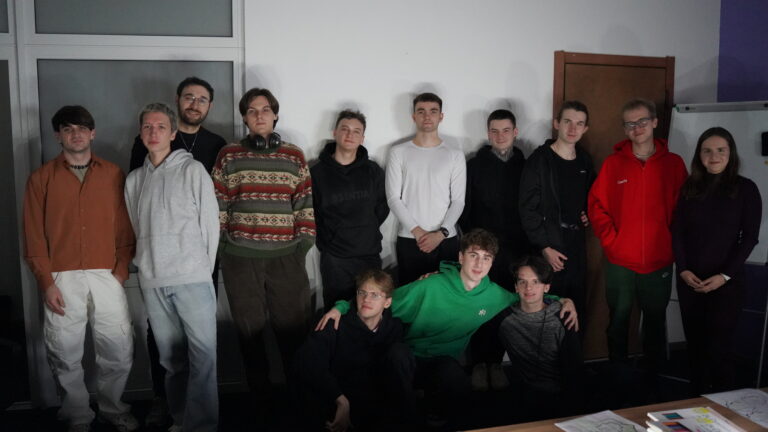
On December 7, 2025, another psychological support group for young people was held in Kyiv. For many people, the winter period becomes a real challenge. Shorter daylight hours, cold weather, isolation, and chronic fatigue are often accompanied by decreased energy, sleep disturbances, apathy, and a low mood. These were precisely the themes addressed by a psychological support group that recently took place, bringing together participants interested in gaining a deeper understanding of their inner state and practical ways of self-help.
What the group was about
The main goal of the meeting was to explain the mechanisms of the downward and upward spirals of depression, to help participants learn how to recognize their own triggers, automatic thoughts, behavioral strategies, and bodily reactions, and to support the formation of a more conscious, realistic, and compassionate self-image.
Participants had the opportunity to learn:
- how seasonal changes affect brain functioning;
- why seasonal depression occurs and what types of it exist;
- the role neural circuits play in maintaining depressive states;
- why depression often “feeds itself” and how this cycle can be gradually changed.
Theory that helps you understand yourself
During the theoretical part, the following topics were covered:
- symptoms of depression and common myths surrounding it;
- the Beck Depression Inventory as a tool for initial self-observation (not for self-diagnosis, but for increasing awareness);
- different hypotheses of depression, including depression as unprocessed grief, as a disconnection from one’s own needs, and narcissistic depression.
Special attention was given to the idea that depression is not a “weakness of character,” but a complex psychophysiological process with an understandable internal logic and, therefore, real opportunities for gradual change.
Practical exercises and experiential work
A significant part of the group was devoted to practice. Participants completed the exercise “Thermal Map of Thoughts,” which helped identify typical automatic thoughts and emotional reactions, as well as the exercise “Positive Self-Image / Self-Care Sheet,” aimed at developing a more supportive attitude toward oneself during periods of exhaustion.
An important part of the meeting was the discussion of personal experiences in a safe group format, with respect for confidentiality, mutual respect, and a focus on one’s own experience.
Group atmosphere
Throughout the meeting, a mindful and non-judgmental atmosphere was maintained. Participants could speak as much as they felt comfortable, use the “stop rule,” and refrain from sharing anything they were not yet ready to disclose. This created a space where the goal was not to “fix oneself,” but to gradually understand oneself better.
Due to missile attacks, Kyiv once again experienced power outages, and our next group took place in semi-darkness, illuminated by flashlights and small sources of light from power banks.


