Psychological Support Group: Learning to Assert Personal Boundaries
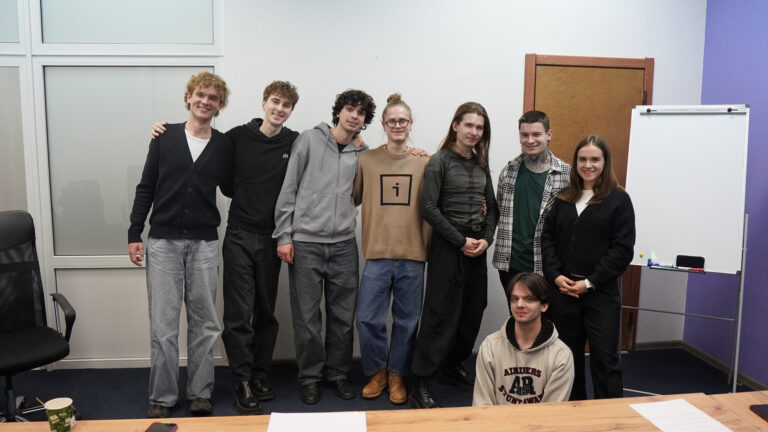
On December 14, a regular psychological support group for young people was held in Kyiv, dedicated to the topic of asserting personal boundaries. The meeting brought together participants who wanted to explore, in a safe and supportive space, why it can be difficult to say “no,” how to recognize boundary violations, and what prevents us from protecting our boundaries in everyday life.
What the group focused on
Issues related to personal boundaries often arise in relationships with family members, partners, colleagues, or friends. Intrusive advice, inappropriate questions, pressure, or manipulation can lead to inner tension, emotional exhaustion, and a loss of connection with one’s own needs.
The goal of the group was to deepen participants’ understanding of personal boundaries and their role in psychological well-being, as well as to help them become more aware of their typical reactions in challenging situations.
Theoretical component
During the session, participants learned about:
- the reasons why people may fail to respect others’ boundaries;
- signs indicating that boundaries need to be established or strengthened;
- the importance of personal boundaries for mental health;
- how family experiences influence the way we assert ourselves in adulthood;
- different types of boundaries and how they manifest in real-life situations.
The theoretical input was combined with group discussion, allowing participants to connect the material with their own personal experiences.
Practical exercises
A significant part of the group was devoted to practice. Participants worked with modeled real-life situations in which boundaries are often violated and explored different ways of responding. During the second exercise, they focused on identifying their preferred boundary types and discussing them in small groups, which helped participants better understand their behavioral patterns.
The practical work provided an opportunity not only to analyze difficult situations but also to safely “try out” new ways of interacting with others.
Group atmosphere
The meeting was conducted in accordance with the principles of confidentiality, mutual respect, and a focus on personal experience. Participants were free to share as much as they felt comfortable and to pause or step back at any time. This created an atmosphere of trust, where sensitive topics could be discussed without fear of judgment.
Key takeaways
At the end of the session, participants reflected on what felt new or especially important to them. For many, the group became a first step toward recognizing their own boundaries, acknowledging their needs, and gradually learning how to assert themselves in everyday life.
Psychological support groups remain an important resource for strengthening mental resilience, developing self-respect, and building healthier relationships with others.


