Leonid Polishchuk, Member of the NGO Eco-Network of Ukraine, Publishes Research on LGBTQ+ Media Representation in a Major Ukrainian Telegram Channel
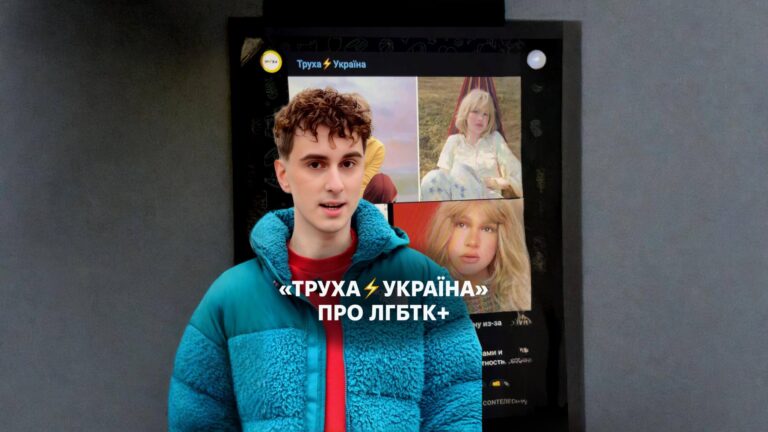
Leonid Polishchuk, a PhD student in the “Media and Communications” program at the National University of Kyiv-Mohyla Academy and an active member of the NGO Eco-Network of Ukraine, has recently published a research article in the journal Printing Horizon (Obrii drukarstva). The study focuses on analyzing how the popular Ukrainian Telegram channel “Truha⚡️Ukraine” covers topics related to the LGBTQ+ community. The research encompasses periods both prior to and during Russia’s full-scale invasion of Ukraine, emphasizing shifts in the tonality, thematic content, and narrative structures of the materials.
The article, titled “Analysis of Narratives about LGBTQ+ on the Telegram Channel ‘Truha⚡️Ukraine’,” was published in Printing Horizon (2025, No. 2(18), pp. 34–51) and is accessible via DOI: https://doi.org/10.20535/2522-1078.2025.2(18).338196. (https://doi.org/10.20535/2522-1078.2025.2(18).338196) The full text is available on the journal’s website: https://horizons.vpi.kpi.ua/article/view/338196
This publication contributes to the broader discourse on the role of media in wartime, particularly regarding how the information space influences social cohesion and minority rights.
Research Aim and Methodology
The study aimed to examine how one of Ukraine’s most subscribed Telegram channels (with over 3 million subscribers) represents the LGBTQ+ community. The author hypothesized that the coverage frequently deviates from journalistic standards—such as objectivity, impartiality, and non-discrimination—thereby potentially reinforcing stereotypes and bias.
The analysis sample consisted of 100 publications: 40 from the pre-invasion period (2019–February 2022) and 60 from the wartime period (February 2022–July 2025). The methodology integrated quantitative content analysis (to evaluate tonality, themes, lexicon, and visuals) with qualitative narrative analysis (to identify deep narrative structures based on the theories of Jerome Bruner, Paul Ricoeur, and others). Data collection utilized keywords associated with LGBTQ+ identities, events, and legislation.
Key Findings: Shifts in Tonality and Narratives
The research demonstrated a distinct evolution in the representation of the LGBTQ+ community. In the pre-war period, negative tonality prevailed (57.5% of materials), characterized by irony, devaluation, and stereotyping. Neutral materials accounted for 42.5%, while positive coverage was absent. Thematic focus centered on public events (Pride marches), violence, legislation, and societal reactions. The lexicon often included pejorative terms such as “gay propaganda” or “homosexualists,” violating ethical journalistic standards.
Narrative analysis identified four dominant narratives during this period:
- Threat to Traditional Values: LGBTQ+ individuals framed as a challenge to moral norms.
- Caricaturization as Absurd Figures: The use of satire to diminish the community’s significance.
- External Ideological Intervention: Associating LGBTQ+ issues with “imposed” Western or Russian influences.
- Social Danger and Destabilization: Emphasizing conflicts and attacks as consequences of community activism.
Following the onset of the full-scale war, tonality shifted: negative materials decreased to 40%, neutral coverage rose to 53.33%, and positive materials emerged (6.67%). This shift may correlate with changes in societal sentiment or editorial policy. While themes remained similar—now with added focus on the war, mobilization, and the international context—discriminatory elements persisted, particularly regarding gay men and transgender individuals, including instances of incorrect terminology (e.g., “transvestites”).
In the wartime period, five narratives were distinguished:
- Confrontation with Conservative Forces: Depicting conflicts during public events.
- Discreditation via Satire: Using irony to undermine legitimacy.
- Threats and Persecution: Focusing on violence without framing it through empathy.
- Normalization and Legitimation: Positive instances of rights recognition (rare but emerging).
- Transgender People as a Symbol of Danger: Stigmatization through stereotypes of unnaturalness.
Visual elements were largely neutral but occasionally included provocative imagery that reinforced bias. Significance and Perspectives Leonid Polishchuk’s work highlights the dual capacity of wartime media to either exacerbate discrimination or foster inclusivity. The findings are pertinent for journalists, human rights advocates, and media regulators, serving to promote ethical standards and combat stigma. The author notes the study’s limitations (focus on a single channel) and suggests further research into media influence on public opinion. The NGO “Eco-Network of Ukraine” acknowledges the achievements of its member and supports initiatives protecting human rights. For a detailed review of the study, we recommend consulting the original article in Printing Horizon. Source: Polishchuk, L. (2025). Analysis of LGBTQ+ narratives in the telegram channel “Truha⚡️Ukraine”. Printing Horizon, 34–51. https://doi.org/10.20535/2522-1078.2025.2(18).338196